
Why choose us
Benefits of Bridges
Fill the Gap
A bridge replaces one or more missing teeth by anchoring to the healthy teeth or implants beside the space.
Fixed in Place
Unlike a removable partial, a bridge stays in your mouth, so there is nothing to take out at night.
Planned by a Prosthodontist
Dr. Buitrago completed a three-year prosthodontics residency at New York Hospital Queens (Cornell), training focused on replacing and restoring teeth.
Made With Our Lab
Our on-site dental lab lets us work closely on the shape, shade and fit of your bridge.
Same Doctor Throughout
You see Dr. Buitrago at every visit, from the first exam to the final fitting.
A single missing tooth changes more than your smile. The teeth beside the gap can drift, your bite can shift, and chewing on that side can start to feel awkward. A dental bridge replaces one or more missing teeth by attaching a replacement tooth to the healthy teeth or implants on either side of the space. It is a common choice for adults and seniors who want a fixed, natural-looking result rather than something removable. At Advanced Dentistry of Coral Springs, Dr. Renan Buitrago plans and places every bridge himself.
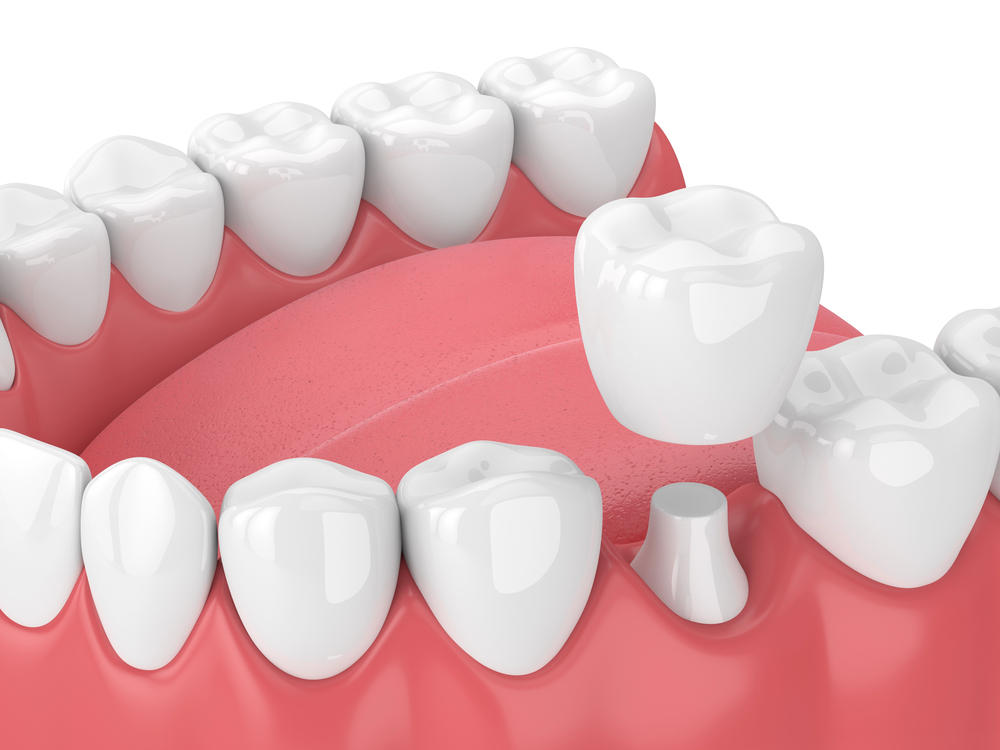
A traditional bridge has three parts. The pontic is the replacement tooth that fills the gap. The abutments are the supporting teeth on each side, which receive crowns. The pontic is joined to those crowns, and the whole piece is cemented in place. Because it stays in your mouth, you brush and eat with it like your own teeth, with no clips to remove at night.
Some patients do better with an implant-supported bridge. Here, dental implants serve as the anchors instead of natural teeth. This can be a good fit when several teeth in a row are missing, or when the neighboring teeth are healthy and you prefer not to reshape them. We offer both options. During your exam, we explain which one suits your mouth and why.
Dr. Buitrago is a prosthodontist, a dentist with three additional years of specialty training in replacing and restoring teeth. He earned dental degrees from Pontificia Universidad Javeriana in 2000 and New York University in 2008, completed NYU's advanced program in prosthodontics, and finished a three-year prosthodontics residency at New York Hospital Queens, affiliated with Cornell. He received the Gersten Award and has owned this Coral Springs practice since 2014.
In practical terms, the same doctor examines you, prepares your teeth, and fits your bridge. You see Dr. Buitrago at every visit. Our office also has an on-site dental lab, which lets us adjust shade, shape, and fit closely to your mouth. When a case needs more, such as a root canal on a supporting tooth, bone grafting before an implant, or gum treatment first, we plan those steps together in-house.
Am I a good candidate for a dental bridge?
You may be a good candidate if you are missing one or more teeth and the teeth or bone around the gap are healthy enough to support a replacement. The details depend on your mouth, so we start with an exam and a frank conversation about your options. Bridges commonly help patients in situations like these:
- A back tooth was extracted and the space now traps food or affects chewing
- A front tooth is missing and you want a fixed replacement that blends in
- The teeth beside the gap already have large fillings or crowns
- Several neighboring teeth are missing and implants could anchor a longer bridge
A bridge is not always the right answer. If the supporting teeth have active decay or gum disease, we treat that first. If many teeth are missing across the arch, a partial denture or implant-supported option may serve you better. Because we offer crowns, partials, dentures, and implants under one roof, we can recommend what fits rather than steering you toward one treatment. If you feel nervous about dental visits, ask us about oral sedation.
How do I care for my bridge after it is placed?
Care for your bridge much as you care for your natural teeth, with extra attention to the area under the replacement tooth. Plaque collects where the pontic meets the gum, so cleaning there each day matters. We show you how to use floss threaders or similar tools before you leave.
Your supporting teeth still need protection from decay and gum disease, since the bridge depends on them. Regular cleanings and exams with our dental hygienist let us check the fit, the gums, and the cement edges. Expect a short adjustment period as your bite and tongue get used to the new tooth. If anything feels high, loose, or sore, call us and we will take a look. We also offer emergency appointments.
How can I pay for a dental bridge?
We accept all major PPO insurance plans, and we welcome self-pay patients. Before treatment, our front office reviews your plan with you so you know what to expect. Because Dr. Buitrago is a prosthodontist, we can file insurance claims as a specialist where that applies.
If you would like to spread out the cost, we offer CareCredit, 0% and low-interest financing, and we take all major credit cards. We go over your choices in plain terms before any work begins.
Patients come to our office at 2232 N University Drive, Suite B, in Coral Springs from Parkland, Coconut Creek, Margate, Tamarac, and nearby communities. If a missing tooth has been bothering you, call us to schedule an exam. Dr. Buitrago will look at the space, talk through your options, and help you decide on a plan that makes sense for you.
The process
What to expect
- 1
Exam and Planning
Dr. Buitrago examines the gap and nearby teeth, then explains whether a traditional or implant-supported bridge suits you.
- 2
Prepare and Fit
We prepare the supporting teeth, take impressions, and fit your custom bridge once it is ready.
- 3
Care and Checkups
Brushing, cleaning under the bridge, and regular visits with our hygienists help it last.